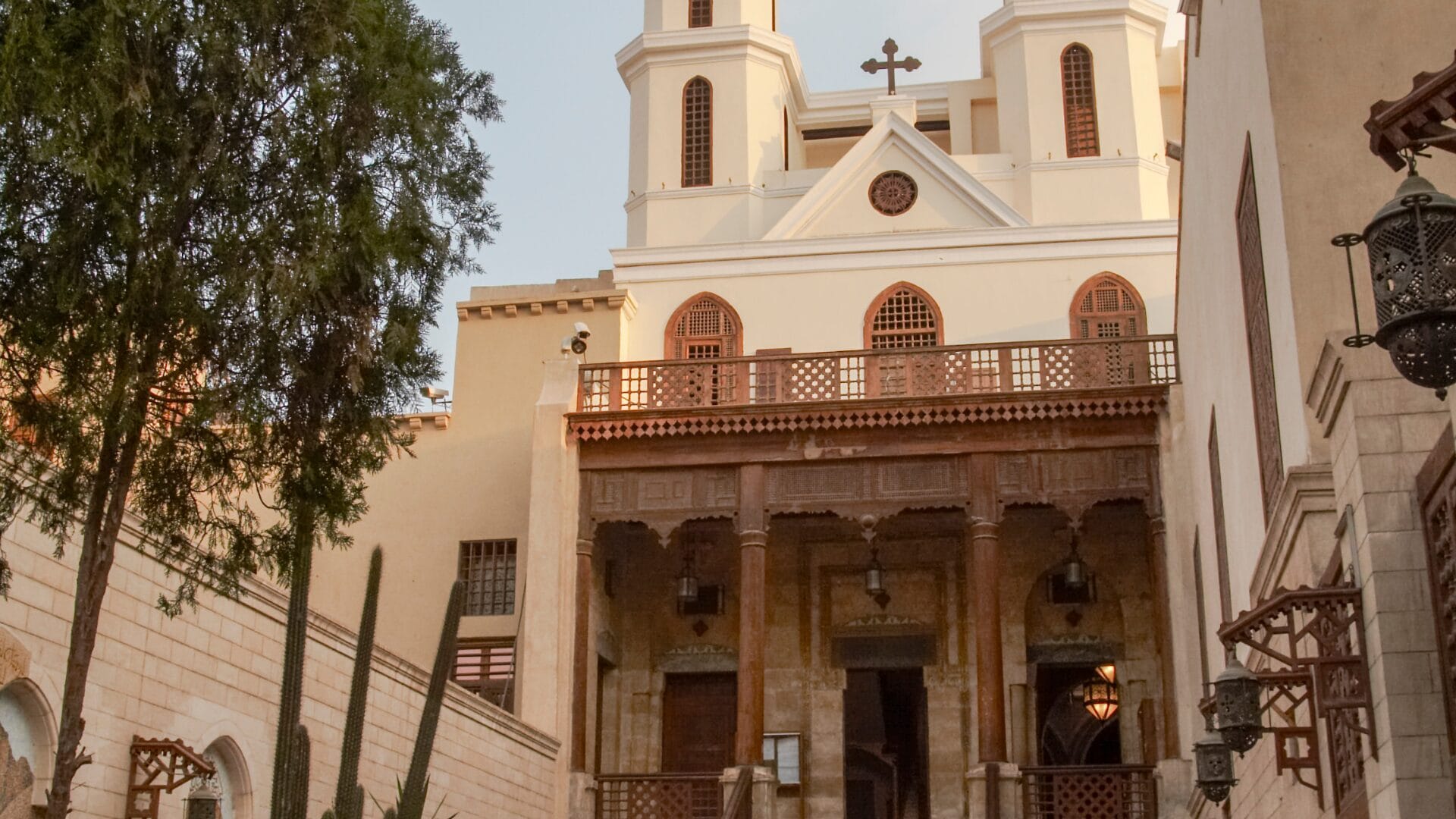
The Hanging Church: The Suspended Sanctuary of Old Cairo
Perched above the gatehouse of an ancient Roman fortress, the Hanging Church—formally known as Saint Virgin Mary’s Coptic Orthodox Church—is arguably the most famous and spiritually significant Christian site in Egypt. Its popular name, Al-Moallaqa ("The Suspended"), refers to its unique location: it was constructed in the 3rd century CE atop the southern bastions of the Babylon Fortress.
By utilizing the fortress towers as its foundation, the church’s nave literally hangs over the passage below, creating an architectural marvel that has survived for nearly two millennia.
Architectural Splendor: A Ship in the Sky
The interior of the Hanging Church is a masterpiece of Coptic craftsmanship, blending Roman, Byzantine, and Islamic artistic influences:
-
The Timber Roof: Look upward to see the magnificent vaulted wooden roof, designed to resemble the hull of Noah’s Ark. This symbolic choice represents the church as a vessel of salvation for the faithful.
-
The Marble Pulpit: The 13th-century pulpit is a stunning example of medieval artistry, supported by 15 slender marble pillars. These pillars represent Jesus, the 12 Apostles, and the Evangelists, with one pillar intentionally darkened to symbolize the betrayal of Judas.
-
The Iconostasis: The sanctuary is shielded by a breathtaking 12th-century screen made of ebony and cedar, intricately inlaid with ivory in complex geometric and floral patterns that predate similar designs found in Islamic mosques.
A Legacy of Spiritual Authority
For centuries, the Hanging Church served as the official residence of the Coptic Pope. It was the center of religious life in Egypt and the site where many of the church’s most important synods and ceremonies were held. Today, it remains a living place of worship where the ancient Coptic language—the final phonetic descendant of the language of the Pharaohs—is still used in daily liturgy.
The Icons of Al-Moallaqa
The church is home to 110 priceless icons, the oldest of which dates back to the 8th century. The most famous is the "Coptic Mona Lisa," a 10th-century depiction of the Virgin Mary and the infant Jesus that is renowned for its expressive, wide-eyed style and spiritual depth.
Expert Recommendations for a Top-Tier Visit
-
The Glass Floor: Near the entrance, look for the small glass-covered cutouts in the floor. They allow you to peer down into the depths of the Roman gatehouse, providing a direct view of the incredible heights at which the church is suspended.
-
Bespoke Timing: We recommend visiting in the mid-morning when the light filters through the high windows, illuminating the ivory inlays of the iconostasis. Our private tours ensure you avoid the busiest hours, allowing for a quiet moment of reflection in the nave.
-
The Cultural Context: At Top Class Egypt Travel, we pair a visit to the Hanging Church with the Coptic Museum, located just steps away. This sequence allows you to move from the active spiritual heart of the district to the historic archive of its art and treasures.
-
Traveler’s Perspective: To step inside the Hanging Church is to walk on air and history simultaneously. It is a place of profound stillness that has witnessed the rise and fall of empires, remaining an unshakable beacon of faith in the heart of Old Cairo.