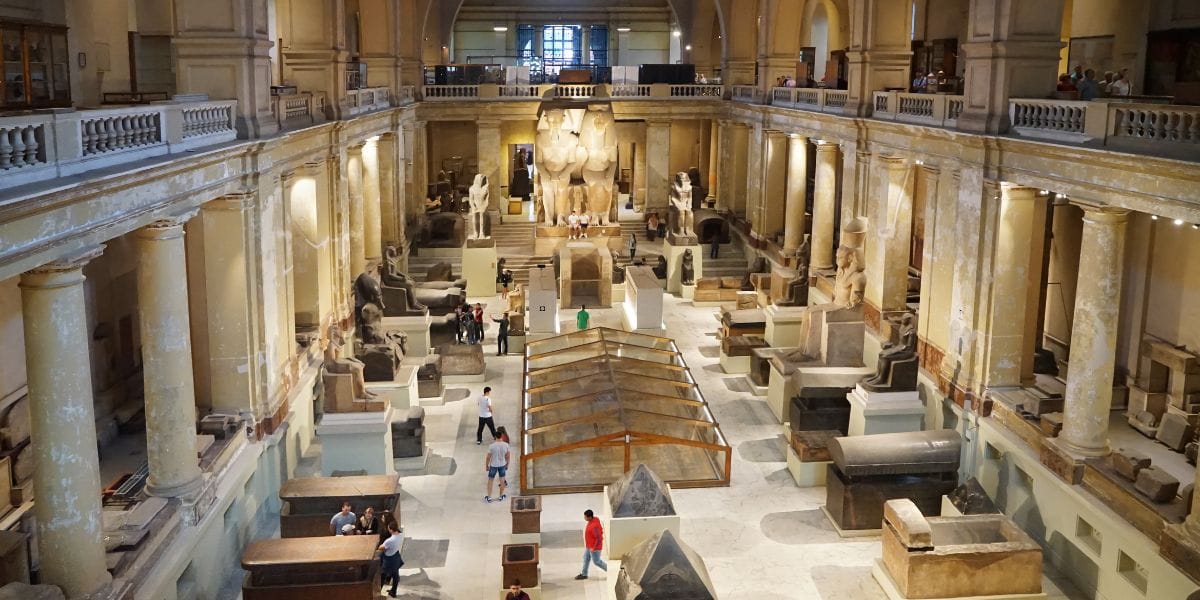
The National Museum of Egyptian Civilization (NMEC) is a groundbreaking institution that redefined the museum experience in Cairo. Located in the historic district of Fustat—the first capital of Egypt under Muslim rule—it is the first museum in the Arab world to focus on the entirety of Egyptian civilization, from the predynastic era to the modern day.
At Top Class Egypt Travel, we recommend the NMEC as a sophisticated companion to the Grand Egyptian Museum. While the GEM celebrates the Pharaonic zenith, the NMEC tells the story of the Egyptian people—their crafts, their faith, and their enduring identity through the Coptic, Islamic, and modern ages.
The National Museum of Egyptian Civilization: A Journey Through Time
The NMEC is more than an archive; it is a cultural hub situated on the banks of the natural Ain El-Sira Lake. Its sleek, modern architecture is designed to lead you on a chronological voyage, showcasing how the ancient traditions of the Nile Valley evolved into the vibrant culture of today.
The Royal Mummies Hall: The Crown Jewel
The museum gained global fame following the "Pharaohs’ Golden Parade" in 2021, when 22 royal mummies were ceremoniously transferred here.
-
A Sacred Atmosphere: Unlike previous displays, the Royal Mummies Hall is designed to evoke the atmosphere of the Valley of the Kings. The dimly lit, subterranean space provides a somber and respectful environment to come face-to-face with history's most powerful rulers.
-
The Immortals: You will find 18 Kings and 4 Queens, including Ramses II, Seti I, Thutmose III, and the formidable Queen Hatshepsut. Each mummy is housed in a state-of-the-art, nitrogen-filled case, accompanied by CT scan imagery that reveals the secrets beneath the wrappings.
The Main Gallery: The Tapestry of Civilization
The Main Gallery is a sprawling space that uses 1,600 artifacts to weave a continuous narrative of Egypt’s soul across millennia:
-
The Predynastic Heritage: See the Nazlet Khater Skeleton, a 35,000-year-old reminder of the deep roots of humanity in the Nile Valley.
-
Faith and Art: The gallery transitions seamlessly between the Pharaonic gods, the intricate woodwork of the Coptic era, and the stunning geometric beauty of Islamic manuscripts and textiles.
-
The Living Traditions: A unique focus of the NMEC is its "intangible heritage" section, showcasing traditional crafts, music, and the evolution of Egyptian medicine and science.
The Dye House (Masbagha): A Glimpse into Medieval Industry
Located within the museum grounds is an extraordinary archaeological discovery: a Fatimid-era dye house. These well-preserved vats and workshops offer a rare look at the industrial heart of Fustat, reminding us that Egypt’s greatness was built not just on gold and monuments, but on the skill and industry of its people.
Expert Recommendations for a Top-Tier Visit
-
The NMEC-Coptic Cairo Pairing: Since the museum is located in Fustat, we suggest pairing it with a morning tour of Coptic Cairo. This allows you to see the churches and synagogues where the history displayed in the museum actually unfolded.
-
The Museum of Civilization at Sunset: The museum’s terrace overlooks Lake Ain El-Sira. Arriving in the late afternoon allows you to explore the galleries and then enjoy a private refreshments break as the sun sets over the lake, offering one of the most serene views in Cairo.
-
Photography Protocols: Please note that photography is strictly prohibited inside the Royal Mummies Hall out of respect for the deceased. However, photography is permitted in the Main Gallery with a standard ticket (no flash), allowing you to capture the stunning architectural layout and key artifacts.
-
Traveler’s Perspective: The NMEC is where the "idea" of Egypt comes to life. It is a place of profound continuity, where you realize that the person who carved a stone 4,000 years ago is the direct ancestor of the artisan weaving silk in Cairo today. It is a "top-class" experience for anyone who wants to understand the people behind the monuments.