The Mummification Museum: Secrets of Eternal Life
Located along the scenic Nile Corniche in Luxor, the Mummification Museum is a specialized and fascinating institution dedicated to one of ancient Egypt’s most enduring mysteries. While many museums focus on the scale of monuments, this museum offers an intimate look at the sophisticated science, intricate tools, and profound religious beliefs that allowed the ancients to preserve the physical body for the journey into the afterlife.
Compact, modern, and brilliantly curated, it serves as the perfect educational foundation before—or after—exploring the royal tombs in the Valley of the Kings [or similar].
The 70-Day Journey: Understanding the Process
The museum’s primary mission is to demystify the 70-day ritual of preservation. Through a series of well-lit displays and diagrams, visitors are guided through the technical and spiritual steps of mummification:
-
Surgical Precision: On display are the actual bronze and flint tools used by the ancient embalmers, including hooks used for brain removal and various scalpels for evisceration.
-
Canopic Jars: You will see the beautifully carved sets of jars—often featuring the heads of the four sons of Horus—used to protect the stomach, lungs, liver, and intestines.
-
Natron and Resins: The museum explains the vital role of natron (a naturally occurring salt) in dehydrating the body and the various aromatic resins and linens used to wrap and seal the "eternal" vessel.
The Menagerie of the Afterlife: Animal Mummies
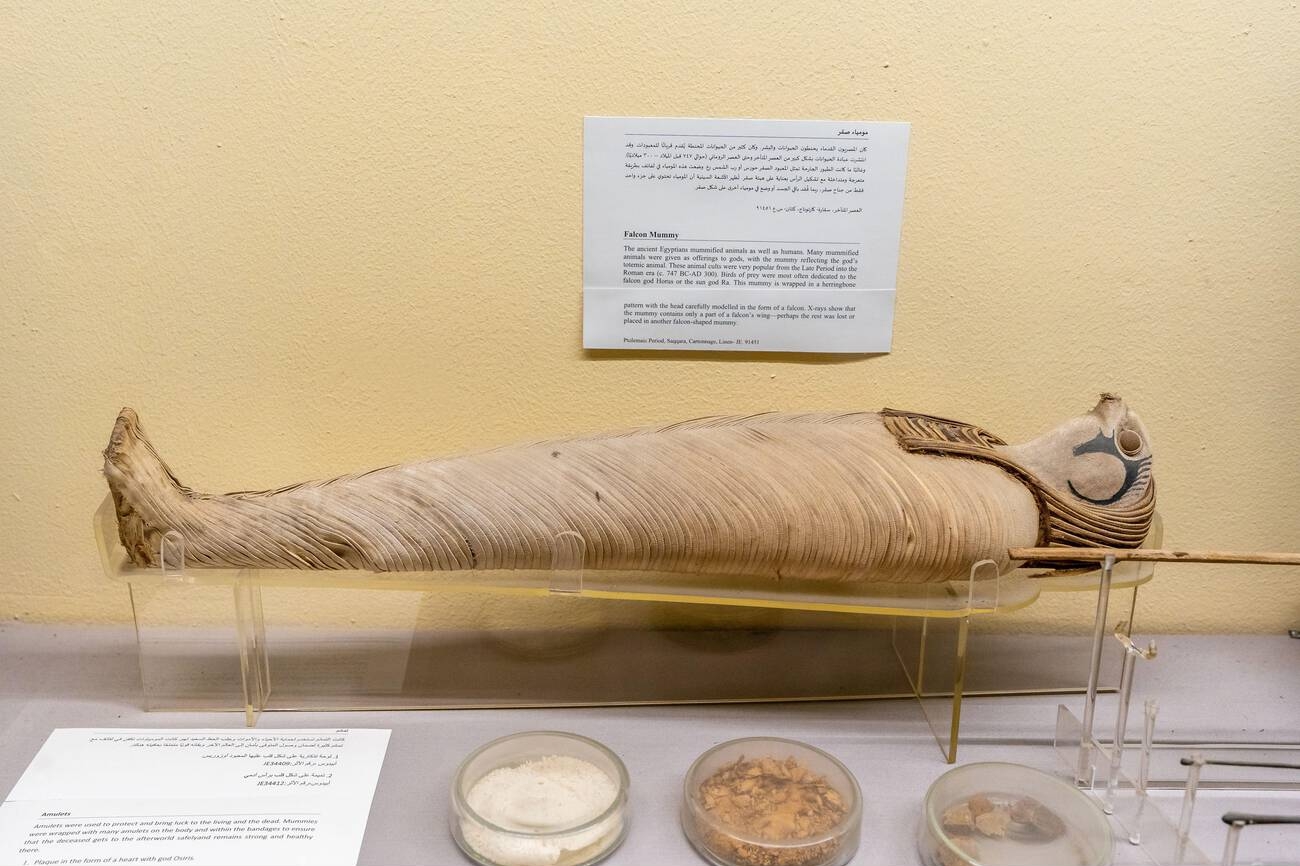
Ancient Egyptians believed that animals also possessed souls or served as earthly manifestations of the gods. The museum houses an impressive collection of mummified fauna, each preserved with the same care as royalty:
-
The Sacred Crocodile: Representing the god Sobek, these massive mummies are a testament to the respect given to the Nile’s most formidable inhabitants.
-
Feline Guardians: Mummified cats, dedicated to the goddess Bastet, are displayed in intricate wrappings that often mimic the animal’s physical features.
-
The Ibis and the Fish: From birds representing Thoth to sacred Nile fish, these exhibits highlight the incredible breadth of the mummification practice.
Key Highlight: The Mummy of Maserharti
The museum’s centerpiece is the exceptionally well-preserved mummy of Maserharti, a High Priest of Amun from the 21st Dynasty. This exhibit allows visitors to see the results of the embalmers' art at its pinnacle, with the skin, hair, and features remarkably intact after three millennia.
Expert Recommendations for a Top-Tier Visit
-
The "Sunset Sequence": We recommend visiting the Mummification Museum in the late afternoon. Because of its location on the Corniche, you can explore the museum in its cool, quiet environment and then walk just a few minutes to Luxor Temple [or similar] as it begins to illuminate for the evening.
-
The Educational Bridge: For travelers visiting with students or those deeply interested in archaeology, this museum provides the "how" that makes the "why" of the great tombs much clearer. It transforms the tombs of the West Bank from mere art galleries into functioning houses for the soul.
-
A Concise Experience: The museum is designed to be experienced in 45 to 60 minutes, making it an effortless addition to a busy day in Luxor without causing "temple fatigue."
Traveler’s Perspective: The Mummification Museum is where the ancient Egyptians' obsession with life—not death—is most visible. It reveals a culture so in love with existence that they spent thousands of years perfecting the art of never saying goodbye.