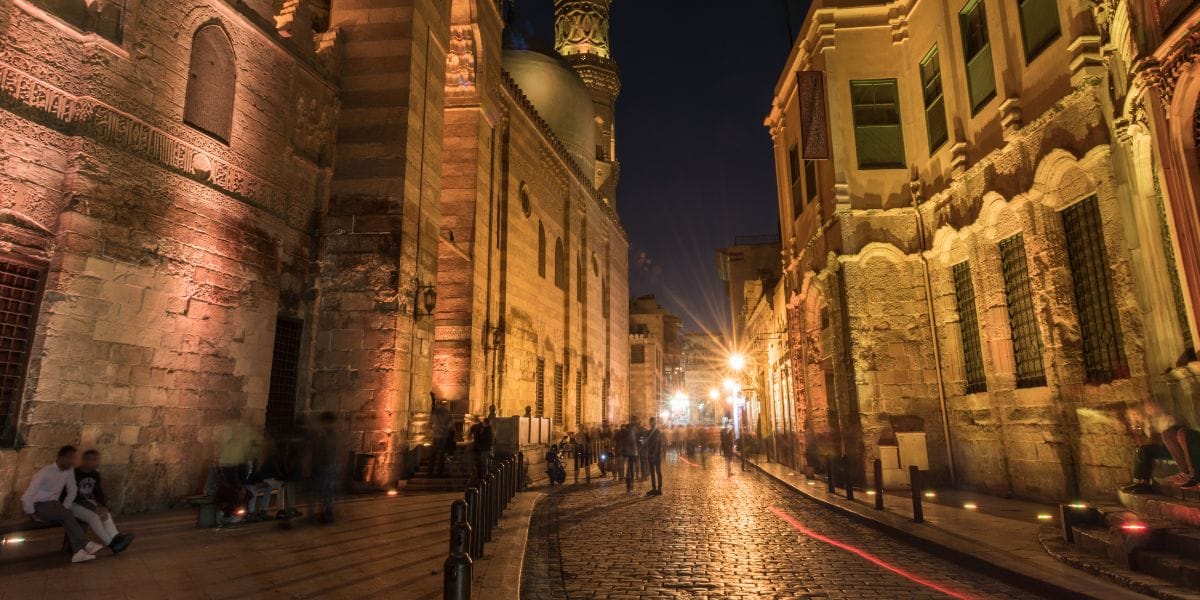
Al-Muizz Li-Din Allah Street: The Golden Pathway of Islamic Cairo
Often described as the world’s largest open-air museum of Islamic monuments, Al-Muizz Street is the historic heart of the Fatimid city. Stretching approximately one kilometer between the grand fortified gates of Bab Al-Futuh and Bab Zuweila, this pedestrianized thoroughfare is a dense tapestry of over 1,000 years of architectural evolution. Walking here is like traveling through a living chronicle of the Fatimid, Ayyubid, Mamluk, and Ottoman dynasties.
A Concentration of Architectural Masterpieces
The density of historical structures on Al-Muizz Street is unparalleled, with each facade telling a story of royal ambition and artistic mastery.
-
The Qalawun Complex: This 13th-century masterpiece is one of the street's most significant landmarks. It includes a mosque-madrasa, a mausoleum, and a hospital (bimaristan). The intricate marble inlay and soaring ceilings represent the pinnacle of early Mamluk architecture.
-
Mosque of Al-Aqmar: Famous for its stunning "Moonlit" facade, this 12th-century Fatimid mosque features the earliest examples of shell-motif carvings and intricate geometric stonework in Cairo.
-
Bayt Al-Suhaymi [or similar]: Located in a quiet lane just off the main street, this 17th-century Ottoman-era merchant house is a masterpiece of domestic architecture. Its shaded courtyards and intricate "Mashrabiya" woodwork provide a glimpse into the sophisticated private lives of old Cairo's elite.
-
Sabils and Kuttabs: The street is dotted with beautifully decorated public fountains (sabils) and elementary schools (kuttabs), reflecting the charitable spirit and social structure of medieval Cairo.
The Pulse of the Old City: Khan el-Khalili
As you navigate Al-Muizz Street, you will pass through the world-famous Khan el-Khalili [or similar] bazaar district.
-
Sensory Splendor: The narrow alleys branching off the main street are filled with the scent of saffron and sandalwood, the rhythmic sound of copper-smiths at work, and the glint of gold and silver jewelry.
-
Historic Cafés: This is the perfect area to rest at El Fishawy [or similar], Cairo’s oldest coffee house, and enjoy a traditional mint tea while watching the vibrant street life go by.
The Experience: From Dawn to Dusk
Al-Muizz Street offers two distinct and equally captivating personalities depending on when you visit:
-
The Morning Light: For those seeking a quiet, contemplative exploration of the architecture, we recommend a morning visit. The soft light highlights the textures of the limestone and the intricate details of the carved stucco before the bazaar reaches its peak energy.
-
The Evening Illumination: After sunset, the street transforms. The monuments are bathed in professional architectural lighting, and the area becomes a social hub for locals and visitors alike. The atmosphere is electric, especially during the month of Ramadan or cultural festivals.
Expert Recommendations for a Top-Tier Visit
-
The "Two Gates" Walk: We recommend starting at Bab Al-Futuh (The Gate of Conquests) and walking south. This route allows you to finish your tour near the tent-makers' market (Al-Khayamiya) and the towering minarets of Bab Zuweila.
-
Panoramic Perspectives: For a truly "Top Class" view, climb the stairs of Bab Zuweila. From the top of the minarets, you can look down the entire length of Al-Muizz Street and see the "City of a Thousand Minarets" stretching to the horizon.
-
Guided Insight: Because the history of each building is so layered, we suggest exploring with a professional Egyptologist who can point out the subtle "architectural signatures" left by the various Sultans and Caliphs.
Traveler’s Perspective: Al-Muizz Street is not just a destination; it is a time machine. To walk its length is to understand that in Cairo, history is not something found in books—it is something you walk through, breathe in, and live.