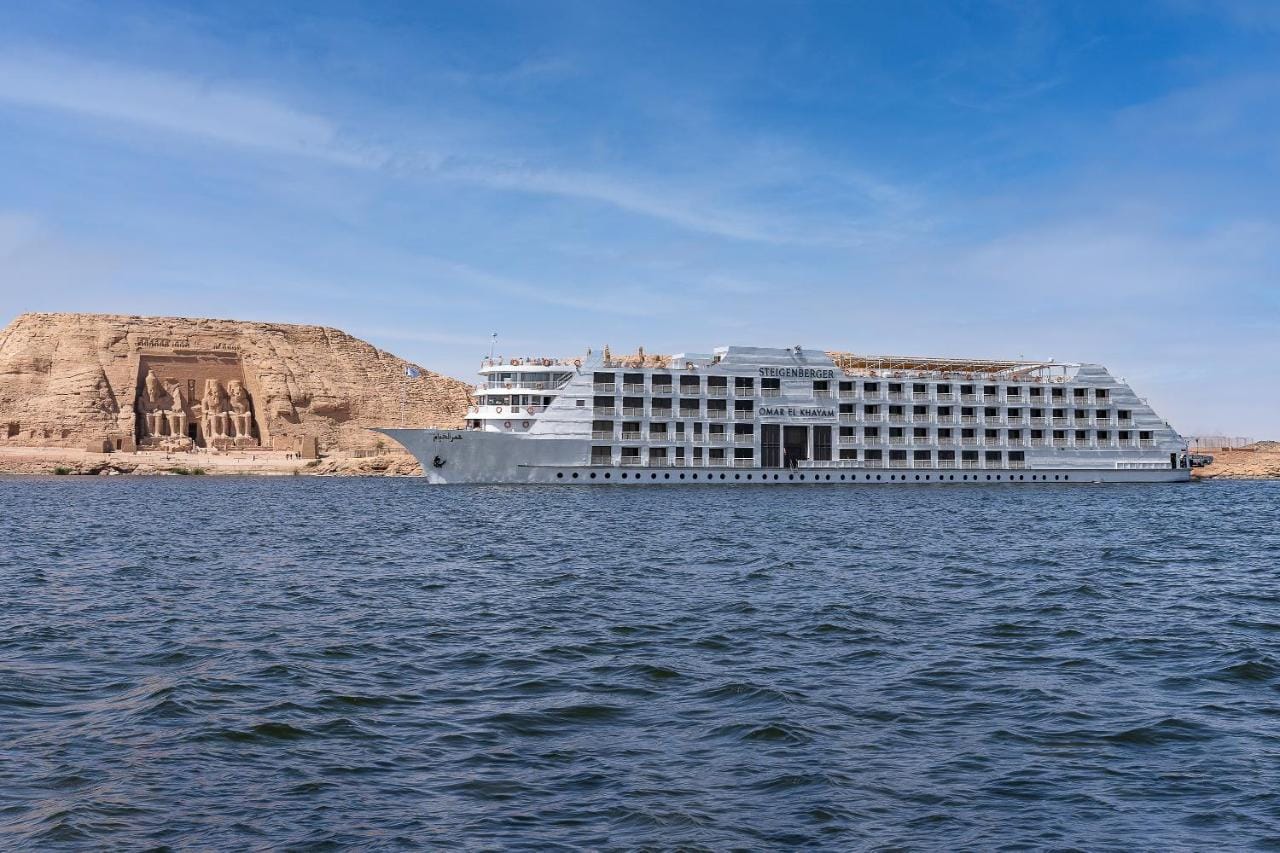
Lake Nasser Cruise: The Silent Voyage Through Nubia
A Lake Nasser cruise is Egypt’s most exclusive and serene travel experience. Sailing the vast, sapphire waters of one of the world’s largest man-made reservoirs, this journey takes you into the heart of ancient Nubia to visit rescued temples that remain inaccessible to the standard tourist path.
Stretching between Aswan and Abu Simbel, the lake offers a dramatic landscape where the golden sands of the Sahara meet a deep-blue horizon. It is a voyage defined by solitude, profound silence, and the rare opportunity to walk through thousand-year-old monuments without another soul in sight.
The Rescued Temples: A UNESCO Legacy
The primary allure of a Lake Nasser cruise is the collection of "saved" monuments, relocated stone-by-stone during the 1960s to escape the rising waters.
-
Wadi es-Sebua: Known as the "Valley of the Lions," this temple features a spectacular processional way flanked by sphinxes. It is one of the few places where you can witness a unique blend of Pharaonic architecture and early Coptic Christian art.
-
The Temples of Amada and Derr: These are among the oldest monuments in Nubia. The Temple of Amada is renowned for its exceptionally well-preserved relief carvings and vibrant pigments that have remained untouched for over 3,000 years.
-
The Kalabsha Complex: Typically visited near the High Dam, this site includes the massive Temple of Kalabsha—the largest free-standing temple in Nubia—and the charming rock-cut Temple of Beit el-Wali, commissioned by Ramses the Great.
-
Kasr Ibrim: This is the only monument on the lake that remains in its original location, now appearing as a dramatic island. While guests do not disembark here to ensure the site's preservation, the ship sails close enough to provide a prestigious view of this once-great citadel.
An Atmosphere of Absolute Tranquility
Unlike the busy Nile between Luxor and Aswan, Lake Nasser is a sanctuary of peace.
-
Extraordinary Solitude: With only a handful of licensed cruise ships permitted on the lake, your vessel is often the only one at a temple mooring. This allows for an intimate, reflective connection with the ancient world that is impossible elsewhere.
-
Celestial Masterpieces: Far from the lights of any city, the night sky over Lake Nasser offers world-class stargazing. The sunsets are equally legendary, turning the surrounding desert hills into shades of violet and crimson.
-
Wildlife and Nature: The lake is a haven for migratory birdlife and is famous for the Nile Perch. From the deck, you may even catch a glimpse of a basking crocodile—a sight now rare on the northern Nile.
The Onboard Experience
Lake Nasser cruises are designed for the contemplative traveler, featuring a slower, more refined pace.
-
Boutique Luxury: Elite vessels such as the M/S Eugenie or the M/S Kasr Ibrim are designed with classic elegance, featuring spacious teak decks and panoramic windows that frame the desert scenery.
-
Expert Narrative: Every journey is accompanied by a professional Egyptologist who brings the complex history of the UNESCO rescue mission and the Nubian civilization to life.
Expert Recommendations for a Top-Tier Voyage
-
The Abu Simbel Finale: At Top Class Egypt Travel, we recommend the itinerary that concludes at Abu Simbel. Arriving at the Great Temple of Ramses II by water—seeing the four colossal statues emerge from the horizon as the ship approaches—is the most dramatic way to experience this world wonder.
-
Optimal Timing: The ideal window for a Lake Nasser cruise is between October and April, when the air is crisp and the desert sun provides a comfortable warmth for exploration.
-
The Ultimate Extension: This cruise is the perfect "sophisticated retreat" to follow a traditional Nile journey. After experiencing the vibrant energy of Luxor, the lake provides a three or four-day sanctuary to decompress in the silence of the Sahara.
-
Traveler’s Perspective: To sail Lake Nasser is to experience Egypt in "slow motion." It is a journey where the modern world disappears, leaving only the water, the stars, and the enduring stone of the ancients.