Elephantine Island: The 5,000-Year Heart of Aswan
Floating in the center of the Nile at Aswan, Elephantine Island is a living chronicle of Egyptian civilization. For over five millennia, this island has served as a vital frontier fortress, a bustling ivory trade hub, and a sacred sanctuary. Its ancient name—Abu—likely refers to the smooth, rounded granite boulders along its shores that resemble elephants bathing in the river, or perhaps to the island's historical role in the African ivory trade.
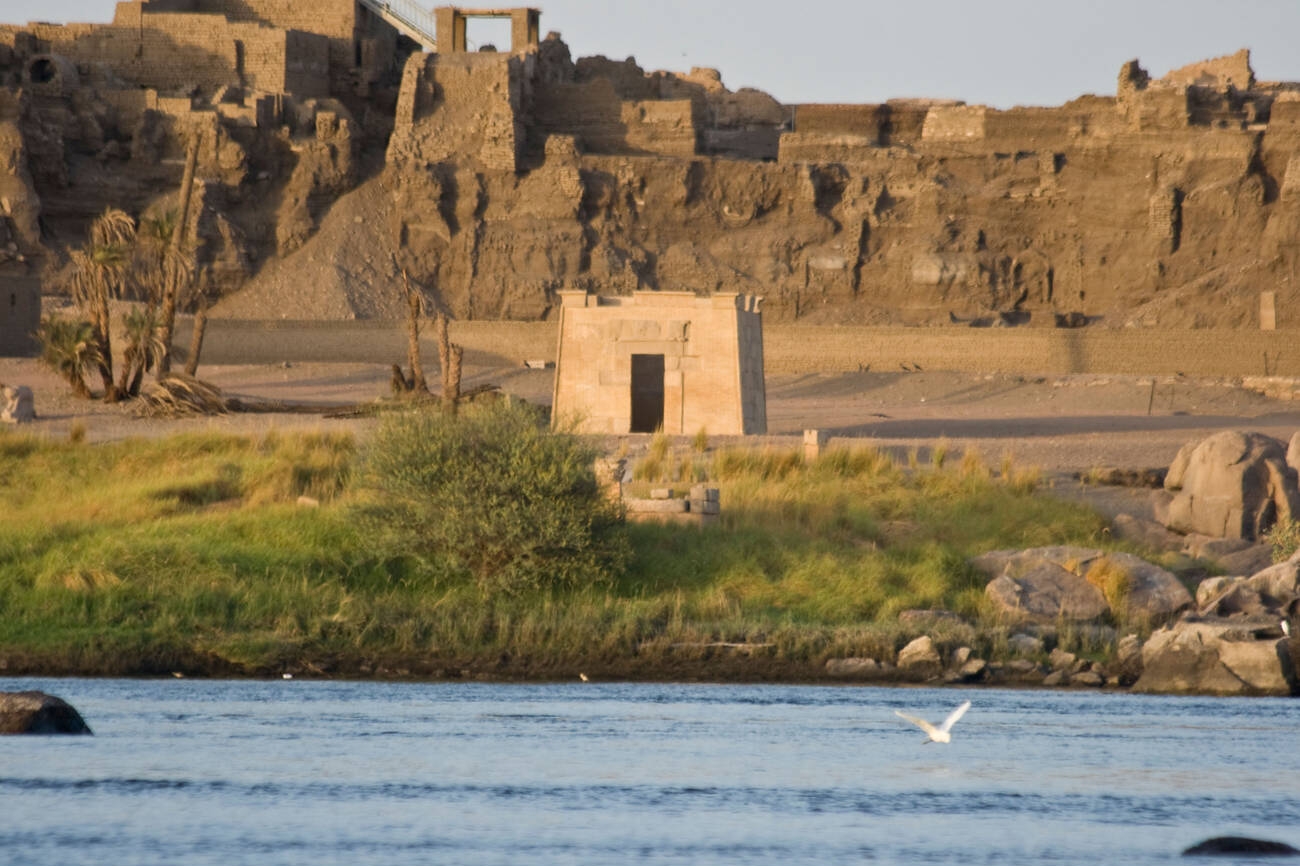
Today, Elephantine offers a sophisticated "two-in-one" experience: the southern half is an expansive archaeological park revealing layers of Pharaonic and Greco-Roman history, while the northern half is home to vibrant, car-free Nubian villages that pulse with modern life.
The Archaeological Park: Sentinels of the South
The southern tip of Elephantine is a world-class open-air museum where ongoing excavations by the German Archaeological Institute continue to rewrite the history of early Egypt.
-
Temple of Khnum: Dedicated to the ram-headed creator god believed to control the source of the Nile. While largely in ruins, its massive foundations and scattered granite blocks hint at its former status as Aswan's primary religious center.
-
Temple of Satet: Originally constructed around 3000 BCE, this temple was dedicated to Khnum’s consort and the goddess of the Nile cataracts. It is an architectural rarity, allowing guests to trace the evolution of a single sanctuary through nearly every dynasty of Egypt.
-
The Step Pyramid: A rare, small granite step pyramid dating back to the 3rd Dynasty—one of only seven "provincial" pyramids found throughout the country.
-
The Aswan Museum: Housed in an elegant 19th-century colonial villa, this museum displays artifacts unearthed on the island, including the mummified ram of Khnum, intricate predynastic pottery, and ancient weaponry.
Measuring the Life-Blood: The Elephantine Nilometer
One of the island’s most fascinating engineering marvels is the Ancient Nilometer, a stone corridor featuring a staircase descending directly into the Nile.
-
90 Steps of History: The walls are etched with calibrated markings in Hieroglyphic, Roman, and Arabic numerals. For centuries, priests used these to predict the success of the harvest and calculate tax rates based on the height of the annual flood.
-
A Sacred Duty: Because the flood was viewed as a divine gift from Khnum, the Nilometer served as both a scientific instrument and a religious gateway to the underworld.
Nubian Heritage: The Villages of Siou and Koti
In the center of the island, the desert sands give way to narrow, shaded lanes and lush palm groves. This is the heart of the resident Nubian community.
-
Vibrant Artistry: The villages of Siou and Koti are famous for their mud-brick homes painted in brilliant shades of turquoise, yellow, and violet. Look for traditional geometric patterns and mummified crocodiles over doorways—ancient symbols of protection.
-
Nubian Hospitality: The pace here is rhythmic and peaceful. At Top Class Egypt Travel, we facilitate authentic connections, allowing our guests to enjoy traditional Hibiscus tea (Karkade) in local courtyards, providing a warm contrast to the monumental ruins nearby.
Expert Recommendations for a Top-Tier Visit
-
The Felucca Arrival: The most prestigious way to reach the island is by private Felucca. Sailing around the island's granite boulders at sunset allows you to witness the ancient ruins and colorful homes glow in the golden "Magic Hour" of Aswan.
-
Strategic Exploration: We recommend beginning your tour at the archaeological site in the cool of the early morning. Afterward, wander through the shaded Nubian villages for a traditional lunch as the sun reaches its peak.
-
Cultural Etiquette: While the Nubian people are renowned for their hospitality, these are living residential communities. We recommend a respectful approach and always advise our guests to ask permission before photographing local residents or private homes.
-
Traveler’s Perspective: To walk Elephantine Island is to move through time. In the morning, you are surrounded by the dust of empires; by afternoon, you are immersed in a living culture that remains as vibrant as the Nile itself.