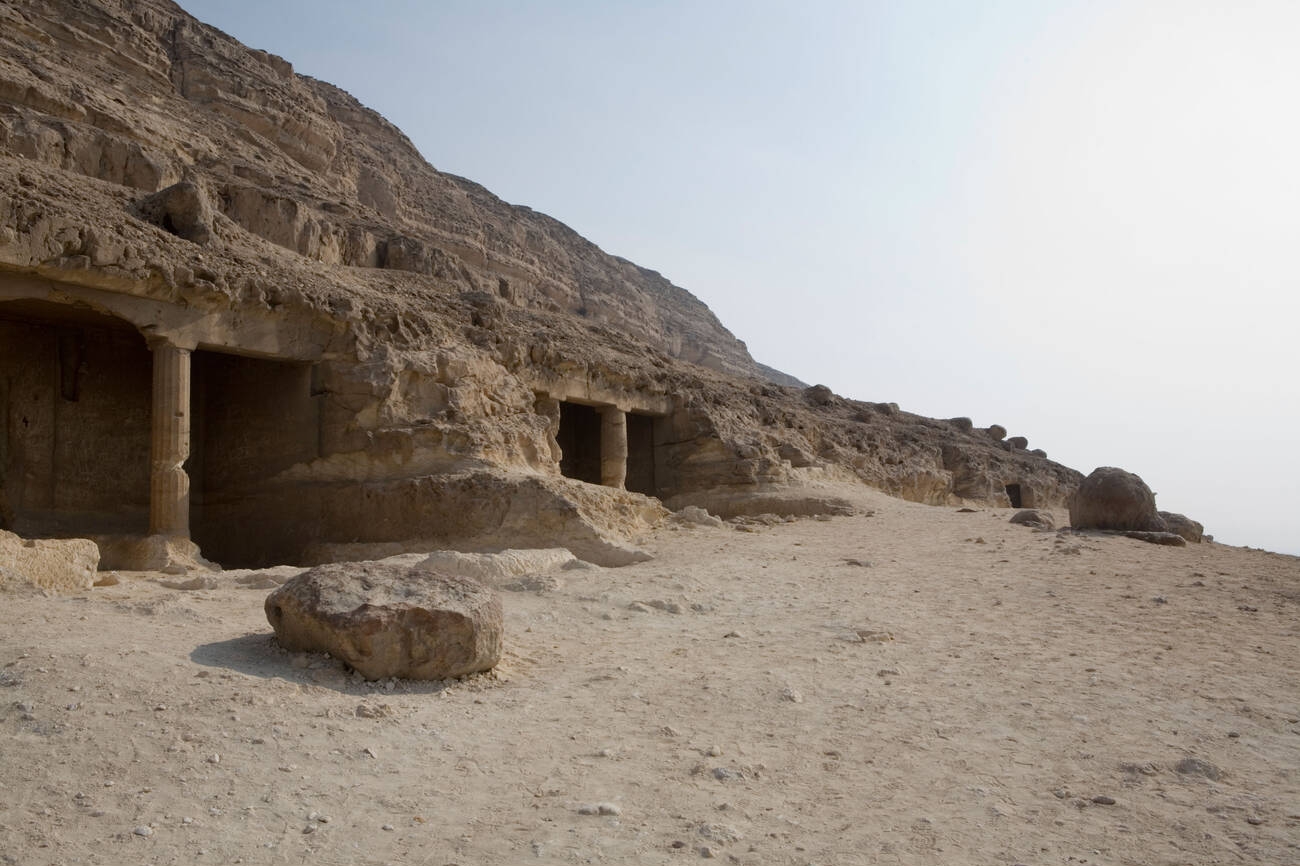
The Beni Hassan Tombs: A Vivid Gallery of Middle Kingdom Life
Carved into the towering limestone cliffs on the East Bank of the Nile near Minya, the Beni Hassan Tombs represent one of the most significant archaeological treasures of the Middle Kingdom (c. 2000–1800 BCE). This elite necropolis contains 39 rock-cut tombs belonging to the powerful Nomarchs (regional governors) and high-ranking officials of the Oryx Nome.
While the Great Pyramids showcase the monumental power of the Old Kingdom, Beni Hassan offers something far more intimate: a high-definition window into the daily lives, sports, and international relations of the Egyptian people nearly 4,000 years ago.
The Art of Daily Life: A Masterclass in Detail
The wall paintings at Beni Hassan are world-renowned for their vibrancy and unconventional subject matter. Unlike the purely ritualistic scenes found in many other sites, these murals capture the energy of the living world:
-
The Famous Wrestling Friezes: In the Tomb of Baqet III and the Tomb of Khety, you will find hundreds of individual figures depicted in various wrestling positions. This "ancient manual of combat" is a unique masterpiece of Egyptian art, showing a level of fluid motion and athletic detail rarely seen in other periods.
-
The Caravan of the East: The Tomb of Khnumhotep II features one of the most historically significant scenes in Egyptology: the arrival of a Semitic trading caravan. With their colorful, patterned garments and exotic goods, this mural serves as a vital record of Middle Kingdom international trade and the movement of peoples across the ancient Near East.
-
Nature and Industry: The walls are alive with scenes of hunting in the desert, fishing in the marshes, and the meticulous work of weavers, potters, and goldsmiths, preserving the industrial heritage of the Nile Valley.
Architectural Elegance: The Proto-Doric Pillars
The architecture of the Beni Hassan tombs is equally fascinating. The facades of the major tombs feature elegant, fluted columns carved directly from the living rock.
These columns are often referred to as "Proto-Doric" due to their striking resemblance to the later Doric columns of Ancient Greece. This suggests that the architectural seeds of the Classical world were being sown in the cliffs of Middle Egypt over a millennium before the Parthenon was built.
The Journey: A Vista Over the Nile
Reaching Beni Hassan is an adventure that captures the timeless essence of the Egyptian landscape:
-
The Nile Crossing: The journey typically involves a scenic ferry crossing from the west bank to the east, providing a rare opportunity to see the rural Nile as it has appeared for centuries.
-
The Ascent: A stone staircase leads visitors up the cliff face. While the climb requires a moderate effort, the reward is two-fold: the breathtaking murals within the tombs and a spectacular panoramic view of the lush Nile Valley and its winding river below.
Expert Tips for an Exclusive Experience
-
Off the Beaten Path: Beni Hassan remains one of Egypt’s "Hidden Gems." Unlike the crowded sites of Luxor, here you can often enjoy a private and contemplative experience with some of the world’s oldest paintings.
-
The Best Light: We recommend visiting in the morning when the sun illuminates the cliff face, making for incredible photography of the tomb entrances and the valley below.
-
Luxury Logistics: As this site is located in Middle Egypt, we arrange private, air-conditioned transfers and expert Egyptologist guides to ensure a seamless and comfortable excursion from your Nile cruise or Minya-based hotel.
Traveler’s Perspective: To enter the tombs of Beni Hassan is to see the ancient Egyptians not just as gods or kings, but as people—athletes, craftsmen, and travelers. It is the most human of all Egypt’s ancient sites.