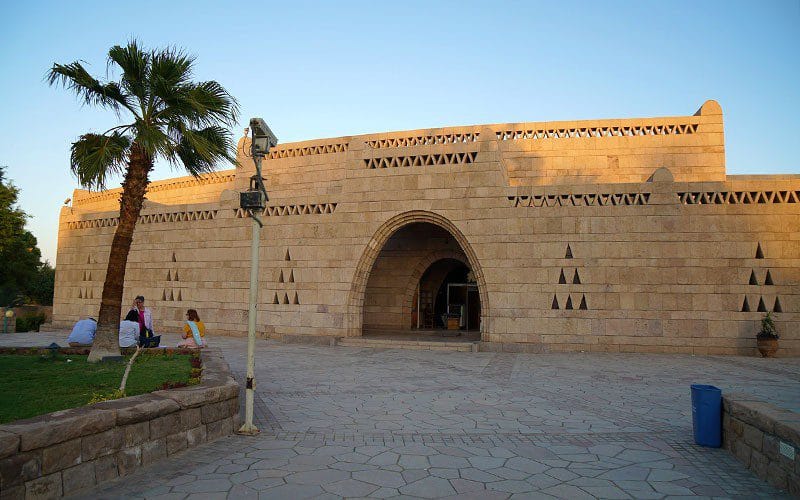
Located in the heart of Aswan, the Nubian Museum is an award-winning architectural masterpiece dedicated to the history, art, and culture of the Nubian people. Opened in 1997 as part of a UNESCO international campaign, the museum serves as a vital repository for a civilization that was largely displaced by the construction of the Aswan High Dam. It is not just a collection of artifacts, but a living monument to the "Land of Gold."
The building itself is a work of art, designed by Egyptian architect Mahmoud El-Hakim to mirror the traditional architecture of Nubian villages, using local sandstone and granite to blend seamlessly into the surrounding desert landscape.
A Chronological Journey Through Nubia
The museum’s exhibits are expertly curated to take visitors on a journey from prehistoric times through the various eras of Nubian power and influence.
-
Prehistoric and Kerma Cultures: Discover the roots of Nubia through remarkably preserved pottery, jewelry, and tools that date back to 4500 BCE. The "Kerma" section highlights the first independent Nubian kingdom and its unique burial customs.
-
The 25th Dynasty (The Black Pharaohs): A highlight of the museum is the section dedicated to the era when Nubian kings ruled over all of Egypt. Massive statues of kings like Taharqa stand as a testament to the military and political might of the Kushite Empire.
-
Coptic and Islamic Nubia: The museum beautifully illustrates the transition of the region through different faiths, showcasing intricate Coptic textiles, carved wooden icons, and early Islamic funerary stelae.
The Ethno-Graphic Display: Living Traditions
One of the most popular sections of the museum is the life-sized ethnographic display, which recreates the daily life of the Nubian people before the flooding of their lands.
-
The Nubian House: A full-scale recreation of a traditional mud-brick home, complete with vibrant wall paintings and authentic household items. This exhibit offers an intimate look at the social structures, wedding customs, and agricultural practices of the region.
-
The Irrigation Exhibit: Learn about the traditional "Saqiya" (water wheel) and the ingenious methods Nubians used to cultivate the narrow strips of fertile land along the Nile for millennia.
The Botanical Garden and Outdoor Exhibits
The museum experience extends into its beautifully landscaped grounds, which function as an open-air gallery.
-
Cave Paintings and Statuary: The garden features prehistoric rock art and monumental statues that were too large to be housed indoors.
-
The Shali (Watercourse): A decorative water feature winds through the garden, representing the Nile’s central role in the life and survival of the Nubian civilization.
Expert Recommendations for a Top-Tier Visit
-
The Evening Glow: The Nubian Museum is one of the few cultural sites in Aswan that stays open in the evening. We recommend visiting after sunset; the museum’s external lighting is spectacular, and the interior galleries are much quieter, offering a more contemplative experience.
-
Combine with a Felucca Ride: For a perfect afternoon, take a private Felucca sailboat around Elephantine Island and land near the museum entrance. It is a seamless way to transition from the river's natural beauty to the region's historical depth.
-
Documentary Screening: Check the schedule for the museum’s theater. They often screen fascinating documentaries regarding the UNESCO rescue mission that moved the temples of Abu Simbel and Philae—context that makes the museum's collection even more impactful.
-
The Museum Shop: The onsite gift shop offers high-quality replicas and books on Nubian history that are often difficult to find elsewhere in Egypt. It is an excellent place for a meaningful, educational souvenir.
Traveler’s Perspective: The Nubian Museum is a place of profound beauty and bittersweet memory. To walk through its halls is to realize that while the waters of Lake Nasser may have covered the land, the spirit, art, and dignity of the Nubian people remain vibrantly alive within these walls.